This guide is for engineers, finishing managers, and buyers who need a repeatable aluminum surface for coating, anodizing, or cosmetic matte—without deforming thin walls or introducing contamination. We compare white, brown, and black aluminum oxide, show how to choose 80–220 grit, and give a step-by-step factory SOP you can copy.
Quick Selection Guide for Aluminum Oxide Media
- General powder/paint prep: Brown aluminum oxide, 100–150 grit, medium pressure.
- Pre-anodize or cosmetic, purity-critical: White aluminum oxide, 120–180 grit, medium-low pressure, dedicated reclaim.
- Heavy oxide / fast roughening: Black aluminum oxide, 80–120 grit, medium-high pressure—then thorough clean-down.
- Always validate on coupons and freeze the parameters into a one-page shop-floor SOP.
Aluminum Oxide Blasting Media—Types and Uses
White Aluminum Oxide Blasting Media (When Purity Wins)
- High purity (typically ≥99% Al₂O₃) minimizes stray tint and contamination before anodize.
- Cuts cleanly; leaves the “clean grey” cosmetic matte buyers expect.
- Best for pre-anodize, decorative surfaces, thin-wall castings, medical/food-adjacent parts.
- Watch-outs: higher cost and more brittle; keep an independent reclaim/screen so it doesn’t pick up darker fines.
Brown Aluminum Oxide Blasting Media (Everyday Workhorse)
- ~95–97% Al₂O₃ with TiO₂, very tough and recyclable.
- The standard for coating prep across aluminum castings and machined faces.
- Balanced cut, good cycle life, strong cost/performance.
- For high-fashion cosmetics, run a glove-wipe and light-box check; step to white if needed.
Black Aluminum Oxide Blasting Media (Aggressive Cutting)
- The most aggressive of the three here; excels at rapid roughening and knocking down heavy oxide.
- Ideal when cycle time dominates or for fixtures and stubborn scale.
- Risk of deeper texture and residue traps—control pressure, avoid over-dwell, and clean thoroughly before finishing.
At-a-Glance Selection Table
| Goal / Scenario | Best Type | Typical Grit | Start Pressure* | Stand-off | Why it works |
|---|---|---|---|---|---|
| Powder/paint prep on aluminum castings | Brown Al₂O₃ | 100–150 | 0.35–0.50 MPa | 150–220 mm | Tough & economical; uniform tooth without deep valleys |
| Pre-anodize cosmetic matte | White Al₂O₃ | 120–180 | 0.30–0.45 MPa | 180–250 mm | High purity; fine, clean texture for even dyeing |
| Heavy oxide / fast roughening | Black Al₂O₃ | 80–120 | 0.45–0.60 MPa | 120–200 mm | High cutting rate; short cycles on stubborn surfaces |
| Thin-wall or precision parts | White Al₂O₃ | 150–220 | 0.25–0.40 MPa | 180–250 mm | Lower peak-valley; gentler energy on delicate ribs |
| Post-machining burr cleanup | Brown / Black | 100–150 | 0.35–0.55 MPa | 150–200 mm | Fast burr knock-down; tune aggressiveness by type |
*Starting ranges; tune to your cabinet, nozzle, and CFM. Use the lowest energy that achieves target texture.
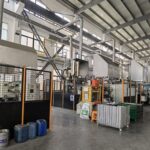
We are a specialized aluminum die-casting factory with in-house blasting cells. If you need parts delivered ready-to-coat or ready-to-anodize, we’ll run sample coupons and lock a repeatable blasting window for you. Ask for a quick DFM + finishing trial.
Grit Selection for Aluminum—80, 100, 120, 150, 180, 220
| Grit | Typical Use | Surface Tendency | Notes |
|---|---|---|---|
| 80 | Heavy oxide / rapid tooth | Coarse tooth; fastest cut | Verify downstream coverage; minimize dwell |
| 100 | Roughen / deburr | Uniform coarse-medium | Good before thick powder builds |
| 120 | General coating prep | Fine, even tooth | Common sweet spot for castings |
| 150 | Pre-anodize / cosmetic | Lower peak-valley | Evens machining lines without “haze” |
| 180 | Thin-wall cosmetic | Very fine | Pair with lower pressure & longer stand-off |
| 220 | Ultra-fine matte | Finest; slowest cut | Appearance priority; accept longer cycle |
Quick picker: start at 120 or 150 on most aluminum; go coarser (100/120) for heavy-build coatings; go finer (150/180/220) for thin walls or premium aesthetics.
Aluminum Oxide vs Sandblasting Sand, Glass Bead, and Garnet
- “Sandblasting sand” (silica): inexpensive but poor recyclability and respirable silica concerns; not recommended for consistent cabinet work.
- Glass bead: peens rather than cuts—great for satin peen-matte, not ideal when you need adhesion “tooth” for coatings.
- Garnet: strong generalist (especially field blasting). For cabinet work on aluminum parts, aluminum oxide usually wins on recyclability and predictable cut.
Process Setup—Nozzle, Pressure, Stand-off, Reclaim
- Nozzle & angle: 6–8 mm boron-carbide; 30–60° impingement to balance cut vs gouge.
- Air pressure & traverse: start 0.35–0.45 MPa for 120–150 grit; steady traverse; 30–50% overlap; avoid over-dwell.
- Stand-off: 150–220 mm for most cases; increase distance for finer grits to avoid hot spots.
- Clean-down: ionized air + HEPA vacuum, lint-free wipe; for critical finishes add ultrasonic alkaline clean and DI rinse.
- Reclaim & screening: inline screens sized to grit (e.g., 60–100 mesh); log hours-since-charge and % fines to keep cut consistent.
How We Lock a Finish
Step 1 — Define the downstream finish
Specify powder film build (µm), liquid paint system, clear/dyed anodize, or bare cosmetic. Flag thin walls (<2.5 mm), delicate ribs, critical cosmetic zones.
Step 2 — Select media & grit candidates
Matrix: White (purity/cosmetic/anodize), Brown (general coating prep), Black (heavy oxide/fast roughening). Start with 120/150; add 100 if tooth is low; try 180/220 for delicate parts.
Step 3 — Establish the starting energy window
Nozzle 6–8 mm (record wear hours). Pressure setpoints 0.35 / 0.40 / 0.45 MPa. Stand-off 150–220 mm (coarser → shorter; finer → longer). Angle 30–60°. Traverse with 30–50% overlap.
Step 4 — Run two coupons (A/B)
- A (conservative): finer grit or lower pressure.
- B (aggressive): coarser grit or higher pressure.
Use same alloy and surface condition as production parts.
Step 5 — Clean-down protocol
Ionized air + HEPA vacuum → lint-free wipe. For anodize or premium cosmetics: ultrasonic alkaline clean → DI rinse → dry ≤60 °C.
Step 6 — Inspect and quantify
- Texture: visual under D65 + low-angle raking light; optional Ra/Rz.
- Adhesion: cross-cut or pull-off after coat/anodize.
- Color cleanliness: check for haze/tinge; white alumina tends to be the cleanest.
Step 7 — Decide & freeze the recipe
Lock media type, grit, pressure, stand-off, angle, traverse speed, pass count. Define reclaim screen (mesh) and max media hours before recharge.
Step 8 — Document traceability
Traveler records: lot ID, operator, cabinet ID, nozzle size & hours, pressure range, stand-off, media batch, hours-since-charge, screen mesh, part count.
Step 9 — Train and verify
One-page SOP with photos of acceptable finish; first-article buy-off; store coupon in a finish library.
Step 10 — Control plan
Weekly: cabinet CFM, gauge calibration, nozzle wear check. Reclaim sieve test: if % fines out of spec, recharge. Define strip-and-reblast route for non-conforming lots.
Production Log Template
| Field | Value | Notes |
|---|---|---|
| Media Type / Grit | e.g., Brown Al₂O₃ / 120 | Batch # / supplier |
| Pressure (MPa) | 0.40–0.45 | Gauge location noted |
| Stand-off (mm) | 180–200 | Measured at fixture |
| Angle (°) | 45 | Nominal |
| Traverse | 300 mm/s | Overlap 40% |
| Nozzle | 7 mm B₄C | Hours since new: 38 |
| Reclaim screen | 80 mesh | Daily check |
| Clean-down | Ionized air + HEPA + wipe | Ultrasonic for anodize lots |
| Coupon adhesion | Pass | Cross-cut 5B |
| Sign-off | Name / date | Traveler attached |
Aluminum Oxide Blasting Media Safety and EHS—What to Control and How
- Dust capture: keep pulse-jet or equivalent collectors working; monitor differential pressure; leaking seals raise exposure and contaminate finishes.
- Respiratory/eye/skin PPE: eye/face protection, hearing protection, respirator per your local limits for nuisance dusts.
- Housekeeping & cross-contamination: run dedicated reclaim lines for white vs brown/black; purge before switching media; keep floors and ledges free of accumulation.
- Combustible metal dust precautions: aluminum dust in high concentration can be hazardous—maintain capture, avoid dust clouds, bond/ground equipment, never dry sweep.
- Waste & recycling: label containers, log disposal or recycling of spent media and fines; follow local regulations.
- Training & signage: operator training on pressure/nozzle safety and emergency stops; verify eyewash/shower access.
Aluminum Oxide Blasting Media FAQs
These address buying and operational decisions not fully shown above; they are informed by common “Related/Long-Tail”/PAA themes but add deeper guidance.
1) Which grit helps thin-film powder (<70 µm) avoid orange peel?
Lean to 150–180 grit with lower pressure and longer stand-off. You want shallow, uniform tooth that doesn’t telegraph through thin films.
2) Can I reuse aluminum oxide blasting media? How many cycles are realistic?
Yes. Track hours-since-charge and % fines. Brown alumina often lasts dozens of cycles in well-kept cabinets; white fractures sooner—screening keeps the cut predictable.
3) Is glass bead better than aluminum oxide for cosmetic aluminum?
Glass bead peens, producing satin looks, but lacks the micro-tooth needed for strong coating adhesion. Use alumina for adhesion-critical prep; use bead for peen-matte effects.
4) When should I move from 120 to 100, or up to 150/180?
If coverage is slow or thick powder struggles to anchor, go coarser (100/120). If thin walls haze or you see over-texture, go finer (150/180) and reduce pressure.
5) How do I prevent residue after blasting with black aluminum oxide?
Ionized air + HEPA vacuum, then lint-free wipe; for anodize lines add ultrasonic clean and DI rinse. Verify with a glove-wipe and an adhesion coupon.
Need aluminum parts that arrive ready-to-coat / ready-to-anodize? We’re an aluminum die-casting manufacturer with controlled blasting cells (white/brown/black alumina lanes, 80–220 grit). Send your drawing and finish target—we’ll run coupons and share a one-page SOP for your approval.