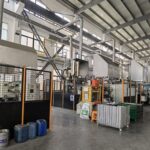
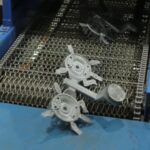
Casting cleaning is not just “making parts look nice.” In aluminum die casting, cleaning is a yield and warranty topic: release agent residue, burrs, trapped media, and internal chips are common root causes behind coating failures, leak-test rejects, and assembly issues.
If you’re sourcing aluminum die-cast parts, the fastest way to avoid surprises is to define (1) what must be removed, (2) what surface state you need next (coating, sealing, machining, leak test), and (3) how cleanliness will be accepted.
what “casting cleaning” typically includes
For aluminum die castings, “casting cleaning” usually means a combination of:
- Deflashing & deburring (remove flash, gate vestiges, sharp edges)
- Blasting / finishing (remove oxide/scale and create consistent surface)
- Degreasing / washing (remove die lube, cutting fluid, fingerprints, dust)
- Drying & contamination control (prevent water spots, corrosion, re-contamination)
- Inspection readiness (so you can coat, assemble, or leak-test without hidden defects)
Table 1 — “What are we cleaning off?” → method → risk if missed
| What needs to be removed (typical in die casting) | Most common cleaning method(s) | If it’s not removed, what happens |
|---|---|---|
| Die release agent / die lube film | Aqueous wash + detergent, sometimes ultrasonic; controlled drying | Paint/powder adhesion issues, “fish-eyes,” sealing contamination, inconsistent torque |
| Flash, fins, gate vestige, sharp edges | Trimming + manual deburr, vibratory deburring, CNC edge break | Assembly cuts/handling injuries, O-ring damage, poor fit-up, rattles |
| Surface oxides, smut, light scale | Shot blasting (steel shot / glass bead / ceramic) or gentle media blasting | Coating defects, cosmetic inconsistency, poor bonding to primers |
| Embedded media / residual shot | Rinse + air blow + magnetic separation where applicable + final wash | Media later falls out → leaks, valve blockage, noise, warranty risk |
| Chips/particles in pockets or internal passages | High-pressure rinse, ultrasonic, targeted air/flush, filtered wash | Leak test failures, blocked cooling passages, electrical shorts/contamination |
| Machining coolant / cutting oil (if post-machined) | Aqueous wash, spray wash, sometimes vapor degreasing | Surface staining, poor coat |
| Dust from blasting/grinding | Final wash + filtered dry; clean packaging | Dust under coating, connector contamination, “mystery” field faults |
Casting cleaning vs surface treatment: keep the boundary clear
- Casting cleaning prepares the part: removes residue, burrs, chips, and contamination.
- Surface treatment (powder coating, e-coat, anodizing, chromate conversion, etc.) is the finish.
Good coating systems fail when cleaning is weak. So in RFQs, treat cleaning as the foundation step—not an afterthought.
The practical die casting cleaning workflow
A robust, production-friendly flow for aluminum die castings often looks like this:
- Trim / degate / initial deflash
- Deburr (manual, vibratory, or CNC edge break depending on geometry)
- Blasting or surface finishing (as needed for appearance or coating)
- Wash / degrease (remove die lube + dust + handling contamination)
- Rinse + dry (water quality + drying control matter)
- Clean handling + packaging (avoid re-contamination)
- Pre-coating or pre-assembly inspection
This is intentionally “boring”—because stable yield is usually built on repeatable basics.
Common casting cleaning methods for aluminum die castings
Shot blasting and media blasting
Best for: removing oxides, improving surface uniformity, preparing for coating appearance, and cleaning rough surfaces.
What to watch:
- Too aggressive blasting can round edges or change cosmetic texture.
- Media choice matters (steel shot vs glass bead vs ceramic) depending on appearance and downstream process.
- If your part has pockets, ribs, or deep holes, plan how to remove trapped shot afterward.
When it’s a good fit: exterior housings and covers where consistent surface look is important.
Vibratory finishing
Best for: small-to-medium parts with many edges, where manual deburring is slow and inconsistent.
What to watch:
- Media selection and cycle time affect edge break. Over-finishing can dull design lines.
- Keep sealing surfaces protected; don’t “polish away” what needs flatness.
When it’s a good fit: brackets, covers, small housings, connector plates.
Manual deburring, grinding, and edge breaking
Best for: low-volume parts, prototypes, tight corners, or local features (gate vestige removal).
What to watch:
- Manual grinding can create localized heat marks or geometry drift if uncontrolled.
- Dust control matters—grinding dust left behind causes coating defects later.
When it’s a good fit: complex parting line areas, gate locations, cosmetic edges.
Aqueous washing / spray washing
Best for: removing die release residue, machining coolants, fingerprints, dust; also a key step before coating, sealing, and leak testing.
What to watch:
- “Clean” depends on chemistry + temperature + time + agitation + filtration.
- Drying is not optional—poor drying causes water spots, corrosion staining, or recontamination.
- For critical parts, filtration and bath maintenance are where quality is won.
When it’s a good fit: almost all die casting programs, especially if coating or sealing is required.
Ultrasonic cleaning
Best for: intricate cavities, internal channels, or components with “trap points” where standard spray wash misses.
What to watch:
- Use it where it adds value—don’t force it onto every part.
- Define acceptance (particle limits, internal passage cleanliness) so it’s not subjective.
When it’s a good fit: thermal parts, valve blocks, parts with internal flow paths.
If your part is coated, sealed, or leak-tested: specify cleaning differently
Most “pain” happens when a buyer says “clean parts” but doesn’t say what clean means.
Table 2 — Recommended cleaning route by part type
| Part type / use case | Typical cleaning route | What to specify in RFQ |
|---|---|---|
| Cosmetic housings / covers (powder coat / paint) | Deflash → blast/finish → wash → dry → clean pack | “Ready for coating”; no oil film; no embedded media; uniform surface finish |
| Sealed housings (IP-rated, oil/coolant contact, gasket/O-ring) | Controlled deburr → wash (focus on sealing faces) → dry → clean handling | “No burrs on sealing surfaces”; “no loose media”; “ready for leak test” |
| Thermal parts (manifolds, cold plates, valve bodies) | Deburr → targeted internal cleaning (spray/ultrasonic as needed) → filtered rinse → dry | “Internal passages free of chips/media”; define particle control expectation |
| Post-machined die castings | Wash to remove coolant + chips → dry → packaging | Specify chip control, drying standard, and “no residue” requirement |
| Assembly-ready components | Final wash + dry + clean packaging | “No dust”; “no free particles”; packaging that prevents re-contamination |
“Copy-paste” wording you can put in PO/RFQ
Use these as starting lines and adjust to your product:
- General cleaning:
“Remove all release agent residue, oils, and loose particles. Parts must be dry and free of visible contamination.” - For coating:
“Cleaning state suitable for powder coating/painting. No oil film, no dust, no embedded blasting media. Surface must be consistent and coating-ready.” - For sealing / leak test:
“No burrs/flash on sealing surfaces. No loose media or chips. Internal cavities and pockets must be free of particles. Parts must be clean and dry prior to leak testing.” - For internal flow paths:
“Internal passages must be cleaned and flushed; no trapped media. Final rinse to be filtered; parts dried and protected from re-contamination.”
This kind of wording reduces the “we thought you meant…” conversations.
Inspection and acceptance: how teams usually confirm cleanliness
In real projects, cleanliness is validated with a mix of practical checks:
- Visual inspection for residue, smut, and trapped media in pockets
- Wipe checks on representative surfaces (especially before coating)
- Air blow / rinse checks for loose particles (common before assembly)
- Leak-test yield correlation (if leak yield suddenly drops, cleaning is often a suspect)
If the part is high-risk (sealed housings, internal channels), buyers typically add a clearer acceptance method instead of relying on “looks clean.”
Where we see aluminum die casting projects go wrong
Most cleaning-related failures aren’t “one method was wrong.” They’re interface problems:
- Sealing faces + burr control (small burr → big leak)
- Trapped media in ribs/pockets (passes today, fails later)
- Release agent residue (coating defects that look random)
- Re-contamination after cleaning (clean process, dirty handling/packaging)
So the best upgrades are often: clearer RFQ wording, a stable route sheet, and contamination control after the final wash.
Where aluminum die casting “cleanliness-critical” parts show up
If you’re mapping where aluminum parts frequently require higher cleanliness control, these are common:
- Inverter housing / cover structures
- OBC housing
- DC/DC converter housing
- Motor housing and end covers
- Gearbox housing
- Battery enclosure parts (tray/cover/rails/end plates)
- Thermal system parts (manifold blocks, valve bodies, cold plates)
- Structural brackets and mounts where stiffness-to-weight matters
FAQ
- What is the best way to clean aluminum die castings before powder coating?
For powder coating, the safest baseline is: deburr → blast (if required for uniform texture) → aqueous wash/degrease → filtered rinse → fully dry → clean handling/packaging. The goal is not “shiny”—it’s no oil film, no dust, no embedded media, and no water spots. In production, coating defects are most often caused by residual die release agent, blasting dust, or re-contamination after washing. A practical check many teams use is a simple white-cloth wipe test on representative areas plus strict rules for post-wash handling (gloves, clean racks, sealed bags). - Can shot blasting cause problems on sealing surfaces or tight-tolerance features?
Yes. Shot blasting can round edges, change surface texture, and embed media, especially on soft aluminum or thin features. On sealing faces, a small texture change can affect gasket/O-ring performance, and trapped shot can later fall out and create leaks. If you must blast, specify masking/protection for sealing surfaces, use a gentler media where possible, and add a defined step for media removal (air blow + wash + inspection on trap points). - How do you remove die release agent residue from die cast parts effectively?
Release agent residue is best handled with a heated aqueous wash using a suitable detergent, with enough time and agitation to break the film, followed by a clean rinse and controlled drying. Problems happen when parts look “visually clean” but still carry a thin film that causes coating adhesion issues. If you see random paint fisheyes or inconsistent coating, release residue (or silicone-like contamination from handling) is one of the first suspects. Keeping wash chemistry and filtration stable matters as much as the machine itself. - What’s the difference between casting cleaning and surface treatment?
Casting cleaning removes contaminants and unwanted material (release agent, oils, dust, chips, burrs, loose media) so the part is ready for the next step. Surface treatment changes or protects the surface (powder coating, e-coat, anodizing, chromate conversion, etc.). If cleaning is weak, surface treatment failures are common—so in RFQs, it helps to define the required “state” (coating-ready, leak-test-ready, assembly-ready) rather than just saying “clean parts.” - How can buyers specify “particle-free” requirements without overpaying?
Start by linking cleanliness to function: Where would a particle hurt you? (seal grooves, valve seats, cooling passages, electronics housings). Then specify the control points: trap-point inspection, a defined final wash + filtered rinse, and clean packaging. Instead of demanding extreme standards everywhere, focus on critical zones and a reasonable acceptance method (visual at trap points + air blow check + process controls). This keeps cost aligned with risk while still reducing leak-test rejects and warranty surprises.
Conclusion
Casting cleaning is an engineering step, not a cosmetic step. In aluminum die casting, define what must be removed, match a repeatable cleaning route to your part type, and specify the acceptance state (coating-ready, leak-test-ready, assembly-ready). That’s how you protect yield and avoid “mystery defects” later.