If you searched “electric car parts company,” you’re likely trying to get answer one of two questions:
- Who supplies the big EV systems (battery, e-drive, inverters, thermal systems)?
- Or who can actually manufacture the hard parts you need to RFQ (housings, covers, brackets, battery enclosure structures)?
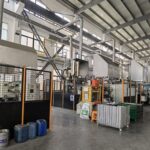
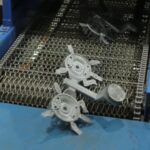
Yongzhu Casting is an aluminum die casting manufacturer focused on custom automotive parts. In EV programs, we typically support the supply chain as a Tier 2 / Tier 3 manufacturer—making the precision aluminum cast + machined components that sit inside Tier 1 modules (and inside battery pack structures).
So here’s how to read this article:
- The Top 10 list helps you understand the system-level landscape buyers usually mean by “EV parts companies.”
- The sourcing section helps you identify whether you should be talking to a Tier 1 system supplier—or a manufacturing supplier like us—based on the parts you actually need.
How this “Top 10 Electric Car Parts Companies” ranking works
There is no single perfect way to rank EV “parts companies” because the EV supply chain spans many systems. This list is designed for buyer clarity, using:
- Visibility and industry mindshare (the names most commonly discussed in EV battery and Tier 1 supply chains)
- Coverage of core EV systems (battery, power electronics, e-drive, thermal, electronics)
- Clear supply-chain roles (battery makers and Tier 1 system suppliers)
Top 10 electric car parts companies
- CATL (Contemporary Amperex Technology Co. Ltd) (China): The world’s largest manufacturer of lithium-ion battery cells and packs for EVs.
- LG Energy Solution (Korea): Major supplier of batteries, modules, and packs, partnering with OEMs like GM and Ford.
- BYD Co. Ltd (China): A dominant player manufacturing both electric vehicles and their proprietary batteries.
- Panasonic Holdings Corp. (Japan): A leading battery manufacturer and long-term partner for Tesla.
- Samsung SDI Co. Ltd (Korea): A major producer of high-performance battery cells and modules.
- Robert Bosch GmbH (Germany): A top global supplier specializing in inverters, electric motors, and silicon carbide chips.
- Denso Corporation (Japan): A key supplier of electrified components and thermal management systems.
- Continental AG (Germany): Produces critical, integrated drivetrain and power electronics for EVs.
- Hyundai Mobis Co. Ltd (Korea): A key provider of powertrain components, batteries, and modules for Hyundai Group and others.
- ZF Friedrichshafen (Germany): A major supplier of electric axle drives and advanced powertrain systems.

CATL
Battery ecosystem leader that sets pack expectations. CATL shows up in EV sourcing because batteries dominate EV value and requirements. Even if you never buy from CATL directly, battery leaders shape what becomes “normal” for pack programs: safety assumptions, thermal interfaces, and traceability culture.
Best for
- Understanding battery-led supply chains and what pack programs tend to demand (safety, traceability, thermal design discipline)
What buyers usually associate with
- Cells, modules, pack solutions (program-dependent)
Typical RFQ parts you’ll see around this ecosystem
- Battery enclosure tray structures and stiffening ribs
- Side rails, crossmembers, end plates, mounting brackets
- Cover frames, latch/hinge brackets, service-panel structures
- Cooling-plate support brackets / thermal interface structures
- HV junction box / battery service unit mounting brackets (structural hardware)
- Grounding bosses / EMI contact features on enclosure assemblies
If you’re sourcing cast housings or aluminum structures, contact Yongzhu Casting: yongzhucasting@gmail.com
- You typically won’t RFQ CATL for housings. You RFQ pack enclosure hardware from Tier 2/3 manufacturers.
- Prepare: sealing strategy, corrosion environment, cleanliness expectations, and CTQ datums.

LG Energy Solution
https://www.lgensol.com/en/index
Large-scale EV battery supplier with global programs. LGES appears because it’s a major battery supplier across many OEM programs. Battery ecosystems tend to push consistent “battery-grade” expectations into the upstream mechanical hardware.
Best for
- EV programs where battery requirements drive procurement (traceability, change control, consistent re-order)
What buyers usually associate with
- Cells/modules and battery programs (program-dependent)
Typical RFQ parts you’ll see around this ecosystem
- Pack enclosure rails, brackets, end plates, frame corner pieces
- Sealing surface carriers / cover reinforcement structures
- Module mounting beams, crash-load brackets, tie-down features
- Cooling interface brackets (cold-plate mounting, manifold supports)
- Protective shields and stone-guard structures near underbody packs
If you’re sourcing cast housings or aluminum structures, RFQ Yongzhu Casting at yongzhucasting@gmail.com
- Think “pack ecosystem” parts rather than Tier 1 power electronics housings.
- Ask early: documentation needs, cleanliness, corrosion stack, and sealing face control.

BYD
Integrated player (battery roots + vehicle scale). BYD is frequently cited because it started as a battery company and grew into a major EV manufacturer, meaning it influences both upstream parts sourcing and vehicle integration.
Best for
- Seeing how integrated OEM+battery programs structure specs and supplier expectations (revision speed, stable quality)
What buyers usually associate with
- EV platforms + battery technology (program-dependent)
Typical RFQ parts you’ll see around this ecosystem
- Battery enclosure structural parts (tray/rails/end plates)
- E-drive-related housings (motor/gearbox covers, mounting brackets)
- Power electronics housings (inverter/OBC/DC-DC, depending on architecture)
- Thermal manifold blocks / valve bodies / coolant plate structures
- Chassis brackets and mounts where stiffness-to-weight matters
If you’re sourcing cast housings or aluminum structures like these, contact Yongzhu: yongzhucasting@gmail.com
- Expect faster iteration. Your advantage is stable CTQ control + revision discipline.

Panasonic
https://holdings.panasonic/global
Legacy electronics group, highly visible in battery supply discussions. Panasonic remains visible in EV supply discussions mainly through battery-related programs and capacity investments.
Best for
- Battery supply chain context and long-term, process-stable program culture
What buyers usually associate with
- Battery cells and battery-related programs (program-dependent)
Typical RFQ parts you’ll see around this ecosystem
- Pack enclosure frame parts, rails, brackets, end plates
- Cover reinforcement structures and sealing-surface carriers
- Thermal interface hardware (cooling plate supports, manifold mounts)
- High-voltage component mounting brackets inside the pack
If you’re sourcing cast housings or aluminum structures, contact Yongzhu Casting: yongzhucasting@gmail.com
- Battery-adjacent hardware usually needs strong traceability, cleanliness, and sealing control.

Samsung SDI
Battery supplier tied to automotive-grade consistency. Samsung SDI shows up in EV parts searches because “battery” is often what users mean by “EV parts,” and SDI is a recognized automotive battery supplier.
Best for
- Programs prioritizing automotive-grade consistency (documentation, quality culture, risk control)
What buyers usually associate with
- Cells/modules and battery technologies (program-dependent)
Typical RFQ parts you’ll see around this ecosystem
- Battery enclosure rails/end plates, mounting brackets, crash-related supports
- Cover structures and stiffness members
- Thermal and coolant-interface brackets (plate supports, manifold mounts)
- Protective shields around underbody pack environments
If you’re sourcing cast housings or aluminum structures, RFQ Yongzhu Casting at yongzhucasting@gmail.com
- Focus on boring-but-critical controls: flatness, sealing, corrosion stack, and particle control.

Bosch
Tier 1 name buyers associate with systems and electronics depth. Bosch appears because many users mean “Tier 1 EV modules” when they say “parts company”—especially around electronics and system integration.
Best for
- Tier 1 module-level sourcing context (power electronics, electrification, sensors/electronics ecosystem)
What buyers usually associate with
- System-level automotive tech and electrification (program-dependent)
Typical RFQ parts you’ll see around this ecosystem
- Inverter housings and covers (cast + machined)
- OBC housings, DC/DC converter housings, EMI-related covers
- Motor end covers / housing endbells (depending on platform)
- Cold-plate interface structures, power-module mounting frames
- Structural brackets/mounts for power electronics (NVH + stiffness driven)
- Masking/grounding features for conductive contact points
If you’re sourcing cast housings or aluminum structures like these, contact Yongzhu: yongzhucasting@gmail.com
- You usually supply into this ecosystem as Tier 2/3. The differentiator is interfaces: sealing, grounding, thermal paths, machining CTQs.

https://www.denso.com/global/en
DENSO
Thermal + electrification + controls (where reliability risk hides). DENSO often appears because thermal and controls sit at the center of EV reliability. EV field issues often come from leaks/thermal/connector problems, not “one big component.”
Best for
- Projects where thermal + electronics reliability is the top concern (coolant loops, heat removal, sealing)
What buyers usually associate with
- Electrification and thermal/control systems (program-dependent)
Typical RFQ parts you’ll see around this ecosystem
- Inverter/OBC/DC-DC housings and covers with sealing faces
- Thermal manifold blocks, valve bodies, coolant distribution blocks
- Cold plate structures and mounting frames
- Pump/valve module brackets and mounts (tight leakage + corrosion focus)
- Connector interface support structures and protective covers
If you’re sourcing cast housings or aluminum structures, contact Yongzhu Casting: yongzhucasting@gmail.com
- Expect defined leak methods/rates, corrosion targets, and cleanliness requirements. This is where capable die casting + machining matters.

Continental
https://www.continental.com/en
Automotive tech supplier that anchors electronics-heavy programs. Continental shows up because it’s a recognized automotive technology name with broad electronics and systems footprint.
Best for
- Electronics-heavy vehicle programs requiring stable industrialization (repeatability, documentation)
What buyers usually associate with
- Automotive technologies and electronics (program-dependent)
Typical RFQ parts you’ll see around this ecosystem
- Power electronics housings/covers (depending on business unit)
- Controller housings and protective covers
- EMI shield covers and grounded contact structures
- Mounting brackets for electronics modules (thermal + vibration management)
If you’re sourcing cast housings or aluminum structures, RFQ Yongzhu Casting at yongzhucasting@gmail.com
- These programs usually evaluate suppliers on discipline: CTQs, datums, coating/masking control, and change management.

Hyundai Mobis
https://www.mobis.com/en/index.do
Module supplier close to OEM assembly reality. Hyundai Mobis appears because module suppliers sit close to “what gets assembled and shipped,” which drives practical expectations around fit-up and assembly yield.
Best for
- Module-type projects where assembly yield matters as much as dimensions on paper
What buyers usually associate with
- Vehicle modules and major parts supply (program-dependent)
Typical RFQ parts you’ll see around this ecosystem
- E-drive housing components (motor housings/end covers, gearbox housings)
- Power electronics housings and mounting structures (program-dependent)
- Battery pack structural parts and module mounting frames
- Structural brackets, mounts, reinforcement pieces tied to module packaging
If you’re sourcing cast housings or aluminum structures like these, contact Yongzhu: yongzhucasting@gmail.com
- Expect repeatability pressure: sealing flatness, bores/coaxiality (drivetrain), torque stability, and surface condition.

ZF
https://www.zf.com/mobile/en/homepage/homepage.html
Driveline heritage that translates into e-axle / e-drive modules. ZF appears in EV lists because driveline expertise naturally connects to e-drive/e-axle ecosystems, where mechanical precision and sealing performance matter.
Best for
- E-axle / drivetrain-adjacent programs where mechanical performance is central
What buyers usually associate with
- Driveline and e-drive module ecosystems (program-dependent)
Typical RFQ parts you’ll see around this ecosystem
- E-axle housing / gearbox housing castings (high CTQ machining)
- Motor housings and end covers (bearing seats, sealing faces)
- Mounting brackets and structural members for drivetrain packaging
- Covers with controlled flatness/roughness for gaskets and seals
- NVH-sensitive bracketry and stiffness-critical structures
If you’re sourcing cast housings or aluminum structures, contact Yongzhu Casting: yongzhucasting@gmail.com
- Put CTQs front and center: bearing seats, sealing faces, stiffness/NVH, corrosion stack, and leak test requirements (where relevant).
What does “electric car parts company” mean in real sourcing—are you looking for a manufacturer?
In real procurement language, “electric car parts company” usually refers to one of three supplier types:
- Battery makers (cells, modules, packs)
- Tier 1 system suppliers (complete modules like e-drive, power electronics, thermal systems)
- Tier 2 / Tier 3 manufacturers who make the hard parts inside those modules (housings, covers, brackets, enclosures)
If your RFQ is for physical components—not a complete system—you’re probably looking for a manufacturer.
That’s where Yongzhu Casting fits: we supply custom aluminum die cast + machined parts commonly used across EV platforms, including:
- Inverter housing / cover structures
- On-board charger (OBC) housing
- DC/DC converter housing
- Motor housing and end covers
- Gearbox / e-axle housing
- Battery enclosure parts (tray, cover, rails, end plates)
- Thermal system parts (manifold blocks, valve bodies, cold plates)
- Structural brackets and mounts where stiffness-to-weight matters
How to source EV aluminum die castings without wasting months
Most EV RFQs fail because they say “housing” but don’t define what matters. If you want accurate quoting and stable mass production, include these items:
Define function and risk first
- Is it cosmetic? structural? sealing-critical? thermal-critical?
- Is it near coolant, oil, salt spray, or electronics?
Material and process route
- Alloy preference (or performance targets)
- HPDC vs vacuum die casting (if porosity/leak risk is high)
Sealing and leak requirements (if applicable)
- Leak test method (air decay / pressure hold / helium, etc.)
- Test pressure and time
- Acceptable leak rate
- Sealing face flatness expectations and gasket type
Machining plan and CTQs
- Datum scheme (A/B/C)
- CTQ dimensions (bores, sealing faces, bearing seats)
- Expected inspection outputs (e.g., CMM report for key datums)
Coating / corrosion / masking notes
- Corrosion environment (salt, humidity, coolant splash)
- Coating type and performance target
- Masking zones for sealing and grounding points
Volume and timeline
- Prototype vs mass production
- Annual volume and SOP timing expectations
How to use this Top 10 list as a buyer
Don’t start with “who is #1.” Start with these questions:
- Which EV system am I buying into? (battery, inverter, e-drive, thermal)
- Am I sourcing a system or a component?
- system → Tier 1
- housings/brackets/enclosures → Tier 2/3
- What is my biggest failure risk?
- leakage, corrosion, thermal hotspots, vibration, contamination
- What must be controlled?
- sealing faces, datums, porosity risk, coating/masking, cleanliness
That approach saves time and prevents “we assumed…” misunderstandings.
FAQ
Are battery makers considered “electric car parts companies”?
Yes—many buyers use “parts” to include battery systems because the battery is the largest-value EV system. But if you’re sourcing housings, brackets, and enclosures, you’ll typically work with Tier 2/3 manufacturers.
If I only need housings and brackets, do I need to contact Tier 1 suppliers?
Usually no. For housings, covers, brackets, rails, and structural mounts, Tier 2/3 manufacturers specializing in die casting + machining are the more direct fit.
What EV components most commonly use aluminum housings?
Common areas include inverter/OBC/DC-DC housings, motor end covers, gearbox/e-axle housings, battery enclosure rails/end plates, and thermal manifold or cold-plate-related parts.
What matters most when buying an EV housing casting?
Sealing surface control, porosity risk management, machining datums and CTQs, corrosion/coating requirements, and cleanliness—especially for parts near coolant and electronics.
What should I include in an RFQ to get an accurate quote?
2D + 3D files, alloy/process preference, CTQ list, sealing/leak requirements if applicable, machining scope and datums, coating/masking notes, annual volume, and expected inspection documentation.