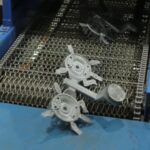
Industrial casting (metal casting) is a manufacturing process where molten metal is poured or injected into a mold to form repeatable parts—often at production scale with controlled tooling, melt practice, gating/venting, and quality inspection. In this article, “industrial casting” means metal casting for manufacturing, not “casting” in programming, film/TV, or medicine.
When industrial casting is the right choice
Industrial casting is usually the right choice when you need complex geometry, internal features, or near-net shapes that would be expensive to machine from solid—especially at repeat volume. It becomes even more attractive when the part can be designed to suit a specific casting process (draft, wall thickness, fillets, feeders, vents).
Fast process selection table
| Your priority | Best-fit casting process | Typical use case | Watch-outs |
|---|---|---|---|
| Lowest tooling cost, large parts | Sand casting | housings, brackets, heavy parts | rougher surface, more variation, more machining |
| High detail, good finish, small-to-medium parts | Investment casting | precision brackets, complex shapes | higher piece price, lead time, gating planning |
| Better finish than sand, medium volumes | Permanent mold, gravity die casting | aluminum housings, covers | needs draft & stable wall thickness |
| Thin walls, fast cycle, high volume | Die casting, pressure die casting | electronics housings, automotive parts | tooling cost, porosity control strategy |
| Lowest risk for tight tolerances at low qty | CNC machining | prototypes, tight tolerance features | can be wasteful/expensive for big volume |
| Lightweight prototypes quickly | 3D printing | concept models, fit checks | not the same as production casting properties |
What “industrial casting” means in a production shop
DIY casting is about “can I make a part.” Industrial casting is about can we make the same part 500, 5,000, or 500,000 times with:
- controlled melt temperature and cleanliness
- stable mold temperature and coating/release strategy
- repeatable fill behavior (gating, runners, vents, overflow)
- defined defect limits (porosity, shrinkage, inclusions)
- inspection plan (CT, X-ray, pressure test, CMM, metallurgy, leak test)
- machining strategy for critical-to-quality dimensions
If you’re writing content to attract buyers, this distinction matters because procurement isn’t shopping for a “method”—they’re shopping for repeatability and risk control.
How industrial casting works in manufacturing
Even though processes differ, most industrial castings follow the same logic:
- Design for casting
- draft, fillets, uniform walls, machining stock, clear datum strategy
- Tooling and pattern development
- sand pattern, wax tooling, permanent mold tooling, or die casting die
- Melt and metal preparation
- controlled charge materials, temperature window, dross management, cleanliness
- Fill and solidification control
- gating/runner design, venting, feeders/risers, chill placement, die temperature
- Shakeout or ejection
- remove from sand shell, break ceramic, open permanent mold, eject from die
- Trimming and finishing
- remove gates/overflows, shot blast, deburr
- Heat treatment (when required)
- common for aluminum sand/permanent mold and some investment castings
- Machining and inspection
- critical surfaces, leak faces, bearing bores, threads, datum planes
- Final QC
- dimensional, visual, X-ray/CT when needed, pressure testing for housings
Common types of industrial casting methods used in manufacturing
Sand casting for industrial parts
Best for: large parts, lower tooling cost, flexible changes
Typical industries: heavy equipment, pumps, industrial housings
- Green sand, resin-bonded, or no-bake systems
- Good when the part is bulky and machining is expected
- Surface finish and tolerance typically need more machining allowance than die casting
Investment casting for complex metal parts
Best for: complex geometry, fine details, good surface finish
Typical industries: aerospace components, medical hardware, precision brackets
- Wax pattern → ceramic shell → pour
- Excellent for shapes that are hard to machine
- Cost is often driven by part complexity and finishing requirements
Permanent mold casting and gravity die casting
Best for: mid-volume aluminum parts with better finish than sand
Typical industries: automotive housings, covers, structural brackets
- Reusable metal tooling, filled by gravity (or assisted)
- Good step-up when sand casting is too variable but die casting isn’t justified yet
- Requires smart wall-thickness control and draft
Die casting for high-volume manufacturing
Best for: thin walls, high repeatability, fast cycle times
Typical industries: automotive, electronics, appliances
- Molten metal injected under pressure into a steel die
- Great for production parts where per-piece cost must be low at scale
- Needs a clear strategy for porosity-sensitive areas and machining
Low pressure die casting
Best for: improved fill control and reduced turbulence versus gravity fill
Typical industries: wheels, structural aluminum parts
- Often used when you want better metal quality and controlled fill
- Equipment and tooling are different from high pressure die casting
Centrifugal casting
Best for: rings, sleeves, pipes, cylindrical parts
Typical industries: industrial tubing, bushings, liners
- Uses rotation to force metal outward
- Can deliver good density in the right geometry
What are the “four types of casting” people mean in searches?
Search results often simplify casting into broad buckets. In manufacturing, a practical “four” grouping is:
- Sand casting
- Investment casting
- Permanent mold casting (including gravity die casting)
- Die casting (pressure die casting)
That’s not a full taxonomy, but it matches how buyers compare processes early in RFQs.
What is GDC and PDC in industrial casting?
This question appears often because the abbreviations are common in supplier discussions.
- GDC usually means Gravity Die Casting: a reusable metal mold filled mainly by gravity.
- PDC usually means Pressure Die Casting (often referring to high-pressure die casting): metal is injected into the die under high pressure.
Practical difference for buyers:
- GDC often targets mid-volume parts with better finish than sand and generally different porosity behavior than HPDC.
- PDC targets high-volume, thinner walls, faster cycles—at the cost of higher tooling investment and tighter process control expectations.
Industrial casting applications in manufacturing
Industrial castings show up anywhere you need strong geometry efficiency:
- Automotive: housings, covers, brackets, structural nodes
- Industrial equipment: pump bodies, valve bodies, gear housings
- Electronics: heat sinks, enclosures, motor housings
- Energy: inverter housings, power electronics enclosures, mounting structures
- Lighting: aluminum housings, frames, thermal management parts
The common thread: castings allow you to move material only where it’s needed—ribs, bosses, and internal cavities are “cheap” in casting compared to machining.
Industrial casting equipment buyers ask about
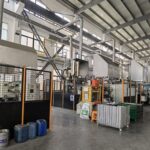
When people search “industrial casting machine,” they may mean very different equipment. In real factories, casting lines include:
- Melting furnace and holding furnace (temperature stability matters more than people think)
- Degassing and filtration practices for aluminum (cleanliness and hydrogen control)
- Mold or die temperature control (stability = repeatability)
- Die casting machine tonnage (clamping force must match projected area and injection needs)
- Trimming presses and finishing
- Machining cells (many production castings are designed with machining datums)
- Inspection (CMM, X-ray/CT, leak testing, spectrometer)
If you’re positioning Yongzhu Casting, this is where you can naturally connect capability: mold engineering + production equipment + machining + QC.
Material selection in industrial metal casting
Industrial casting isn’t only aluminum—but aluminum is often the first step for lightweight parts.
- Aluminum: great strength-to-weight, corrosion resistance, good for housings and structural parts
- Iron and steel: high strength, wear resistance, high temperature capability
- Zinc: excellent for small parts with thin walls and high detail
- Copper alloys: conductivity, corrosion resistance, specialty industrial uses
A buyer doesn’t just choose a metal; they choose a metal + casting process combination that can reliably meet CTQs (leak, strength, fatigue, corrosion, appearance).
Advantages and disadvantages of industrial casting
Key advantages
- Complex geometry at lower cost than machining from solid
- Scalable production when the process is dialed-in
- Near-net shape efficiency (material savings and less machining)
- Design freedom for ribs, bosses, internal features
Common disadvantages and risks
- Tooling lead time and cost (especially in die casting)
- Defects are “process + design” issues (porosity, shrinkage, inclusions)
- Dimensional variation if thermal stability isn’t controlled
- Secondary operations (machining, impregnation, coating) may still be required
The best industrial casting suppliers don’t just “pour metal.” They proactively define:
- where porosity is allowed vs not allowed
- what gets machined and what stays as-cast
- how the part is inspected and qualified
What drives industrial casting cost
Buyers searching “industrial casting costs” usually need clarity on the levers. In real quoting, costs are typically driven by:
- Tooling type and complexity (sand pattern vs permanent mold vs die casting die)
- Part size and projected area (affects machine tonnage and cycle constraints)
- Wall thickness and geometry complexity (fill and solidification risk)
- Alloy and quality requirements (chemistry control, heat treatment, mechanical properties)
- Inspection level (CMM, X-ray/CT, pressure test, PPAP)
- Machining content (critical surfaces, tight bores, flatness targets)
- Finish requirements (shot blast, coating, cosmetic standards)
A helpful way to phrase it for procurement:
The cheapest “casting price” often becomes expensive if the part needs heavy rework, scrap sorting, or unpredictable machining.
When to choose a foundry for production parts
If you’re trying to convert “industrial casting” traffic into inquiries, this section is the bridge.
Choose an industrial foundry or die caster when you need:
- repeatable production (not one-off experiments)
- defined CTQs like leak tightness, flatness, or bearing bores
- controlled metallurgy and documented alloy chemistry
- consistent surface and dimensional behavior across lots
- a real inspection plan (PPAP-style thinking even if not automotive)
Red flags that DIY or prototype-only methods will struggle
- thin walls plus long flow length
- tight leakage requirement on a housing
- critical fatigue or impact strength requirement
- multiple machined datums that must stack tightly
- cosmetics matter (visible surfaces)
RFQ checklist for industrial metal casting suppliers
If you want better leads, publish a practical RFQ block like this:
- CAD (STEP preferred) + 2D drawing with datums and GD&T if available
- material/alloy requirement and any heat treatment
- annual volume and target ramp plan
- CTQs: leak test pressure, flatness, bore tolerances, cosmetic zones
- machining scope: what must be machined vs as-cast acceptable
- inspection expectation: CMM report, X-ray, pressure test, material certs
- target finish/coating: anodize, powder, e-coat, etc.
- application environment: temperature, corrosion exposure, load conditions
If you want to turn this into a money-page style close:
If you’re sourcing industrial aluminum casting for manufacturing parts, we can review your design and recommend the best process path—sand casting, permanent mold, or die casting—based on volume, geometry, porosity risk, and machining requirements. Share your CAD + target quantity, and we’ll respond with a process recommendation and quote structure (tooling + piece price + lead time).
FAQ
What is industrial casting in manufacturing?
Industrial casting (metal casting) is a manufacturing method where molten metal (like aluminum, iron, or steel) is shaped in a mold to make repeatable parts. “Industrial” usually means you’re controlling melt cleanliness, temperature, gating/feeding, mold behavior, and inspection—so the result is not just “a shape,” but a part that can meet CTQs like wall thickness, porosity limits, mechanical properties, and machining allowances.
What are the four main types of casting?
A practical “four types” grouping used in manufacturing is:
- Sand casting: flexible geometry and low tooling cost; good for low–mid volume and larger parts.
- Investment casting (lost wax): best for complex shapes and fine detail; higher per-part cost.
- Permanent mold casting (gravity die casting, GDC): reusable metal mold filled by gravity/low pressure; better repeatability and surface than sand.
- Die casting (pressure die casting, often HPDC/PDC): molten metal injected under high pressure; fast cycles, thin walls, high volume.
In real sourcing, many buyers add “low-pressure die casting” and “centrifugal casting” as separate buckets, but the four above cover most industrial RFQs.
What is the difference between GDC and PDC?
GDC (Gravity Die Casting / Permanent Mold Casting) fills a reusable metal mold mainly by gravity (sometimes with low pressure assist). It’s typically chosen when you want better properties than die casting, thicker sections, and less trapped gas risk—often with heat treat capability depending on alloy and process control.
PDC (Pressure Die Casting / HPDC) injects molten aluminum under high pressure for fast cycles and thin walls. It’s excellent for high-volume, tight dimensional repeatability, but it demands a clear strategy for porosity, sealing surfaces, and machining, especially for housings, coolant-side parts, or electronics enclosures.
What is the industrial casting process?
A typical industrial metal casting process looks like this:
- DFM + process selection (sand vs permanent mold vs die casting)
- Tooling/pattern + gating/feeding design
- Melting + holding (temperature control, clean charge, dross management)
- Mold making + core setting (venting and alignment are where many defects start)
- Pouring/injection (control turbulence; avoid “oxide folding” in aluminum)
- Solidification control (feed shrinkage; reduce hot spots)
- Shakeout/trim/shot blast
- Heat treat (when required by alloy/spec)
- Machining (critical surfaces and datums)
- Inspection (CMM, X-ray/CT where needed, leak test for housings)
The biggest difference vs DIY is that industrial casting is built around repeatability: the same inputs and controls so the 1st part and the 5000th part behave the same.
What machines and furnaces are used in industrial metal casting?
Common industrial setups are built from:
- Melting/holding furnaces: gas/electric crucible furnaces for smaller batches; reverberatory/stack melters + holding furnaces for higher throughput. For aluminum, many shops pour around ~680–760°C depending on alloy, mold temperature, and fill behavior (the number itself isn’t magic—stability is).
- Molding systems: green sand lines, resin sand systems, core shooters, sand mixers, and reclaim systems (this is what makes “industrial sand casting” repeatable).
- Permanent mold / GDC equipment: metal molds, controlled preheat, coating/release, and sometimes low-pressure assist.
- Die casting machines (PDC/HPDC): cold-chamber machines with controlled shot profiles, die thermal control, vacuum assist options, trimming presses, and automated cells. (For reference, many production aluminum die casting suppliers run hundreds to thousands of tons clamping force depending on part size and projected area.)
If your part has thin walls + high volume, die casting equipment is usually the path. If you need thicker sections, better heat-treatable properties, or lower tooling risk, GDC or sand casting can be more appropriate.